Weight-bearing, rehab and home, captured.
The arthroplasty and trauma round, written as you walk it.
On the ward round.
A typical post-op review on an orthopaedic ward, captured as you speak.
-
Open the patient and start talking
Day-one post total knee replacement. Observations, pain scores, wound and dressing intact with no ooze, comfortable at rest; aurii structures it as you speak.
-
Cover the orthopaedic specifics
Weight-bearing status, distal neurovascular check, range of movement, swelling and calf, drain and blood loss, VTE prophylaxis. The findings that drive the plan.
-
Set the rehab plan
Weight-bear as tolerated with a frame, continue analgesia and prophylaxis, physio for mobility, discharge once safe on stairs; aurii splits the assessment from the rehab plan.
-
Review and sign before you leave the bed
The progress note is drafted in front of you. Correct anything, then sign. Nothing is filed until you do. The letters, physio handover, discharge and billing all follow from that signed update.
What aurii drafts.
One spoken review, the full set of orthopaedic documents, each a draft until you sign it.
Where the draft waits for you.
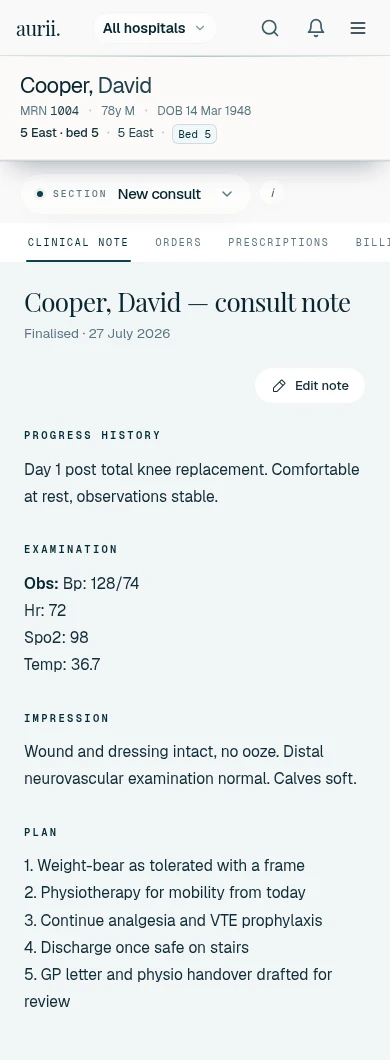
The note opens for review the moment you stop speaking, on the phone in your pocket. This is the screen itself, on a demo patient.
A real aurii screen, shown on a demo patient.
A post-operative progress note.
The day-one knee review, spoken between beds. Watch the note assemble as the words land, yours to correct and sign.
"Day one after the total knee replacement. She's comfortable at rest and the obs are stable."
"Wound and dressing intact, no ooze. Neurovascularly intact distally, calves soft."
"Weight-bear as tolerated with a frame, and physio to start on mobility today."
"Continue the analgesia and VTE prophylaxis as charted."
"Home once she's safe on stairs. Start the GP letter and the physio handover please."
Progress
Day 1 post total knee replacement. Comfortable at rest, observations stable.
Examination
Wound and dressing intact, no ooze. Distal neurovascular examination normal. Calves soft.
Plan
- Weight-bear as tolerated with a frame
- Physiotherapy for mobility from today
- Continue analgesia and VTE prophylaxis
- Discharge once safe on stairs
- GP letter and physio handover drafted for review
A documentation tool, not a diagnostic device: aurii captures billing items for your review against the procedure and your fund agreements; it does not decide what is claimable or set fees. You confirm every item before anything is billed.
Built for the list and the handover.
Arthroplasty and trauma lists run long, and the rehab handover has to be right; aurii fits review-and-sign between beds, not after theatre.
- Signed Sign at the bedsideThe note is ready the moment you finish speaking. Sign there, while the findings are exactly as you assessed them. The documentation doesn't follow you home.
- Handover The handover physio can act onWeight-bearing status and rehab plan are in your own words, so the physio handover and exercise program are clear from day one, not reconstructed at discharge.
- One place The whole episode in one placeOperation note, daily progress notes, GP letter, discharge and billing sit together against the one patient: the full record of the joint or fracture episode.
- Delivered Delivered to the GP's inboxLetters and the discharge can be delivered as HL7 v2 through Medical Objects, landing in the right Australian practice inbox.
Run an arthroplasty list with aurii.
Sign before you leave the ward.
Bring a typical arthroplasty or trauma round. We'll show you the note, the operation record, the letters, the rehab handover, the discharge and the billing, and where you review and sign.
A$199 + GST / clinician / month no lock-in early access by request
hello@aurii.com.au