The post-op round,
written as you go.

Drains, diet, wound, plan. Said once, drafted in full.

On the ward round.

A typical post-operative review on a general-surgical ward, and what aurii captures as you say it.

  1. Open the patient and start talking

    Day one after a laparoscopic cholecystectomy. Observations stable, comfortable, a soft non-tender abdomen, port sites clean and dry; aurii listens and structures as you speak.

  2. Cover the surgical specifics

    The drain's minimal output overnight, the light diet he's tolerating, pain settled on oral analgesia, up and mobilising. Captured in the order you say it, not forced into a template.

  3. State the plan

    Take the drain out this morning, simple analgesia, home tomorrow with wound-care advice and a letter to his GP; aurii separates today's assessment from the plan.

  4. Review and sign before you leave the bed

    The note is drafted in front of you. Correct anything, then sign. Nothing is filed until you do. The GP letter, discharge and billing draw from that signed update.

What comes out the other side.

One spoken review, the full set of surgical documents, each a draft until you sign it.

Draft The progress noteStructured post-op note: observations, abdominal and wound exam, drains, analgesia, diet and bowels, assessment and plan.
Draft The operation noteThe record of the procedure: findings, what was done, any specimens, closure, and the immediate post-operative instructions.
Draft The GP letterBack to the referring GP: what was done, the findings, the post-operative course and follow-up.
Draft The referrer letterTo the original referrer where relevant: the operative findings, outcome and post-operative course.
Draft The discharge summaryDiagnosis and procedure, in-hospital course, discharge medications, wound-care advice, red flags and follow-up.
Draft The private health fund billingDraft billing items for the admission: the operative episode, post-op care, aftercare. It surfaces the items; you decide what's billed.
Sign-off Nothing without your signatureEach stays a draft until a named specialist signs it; aurii proposes, and you stay responsible for what goes out.

Where the draft waits for you.

The note opens for review the moment you stop speaking, on the phone in your pocket. This is the screen itself, on a demo patient.

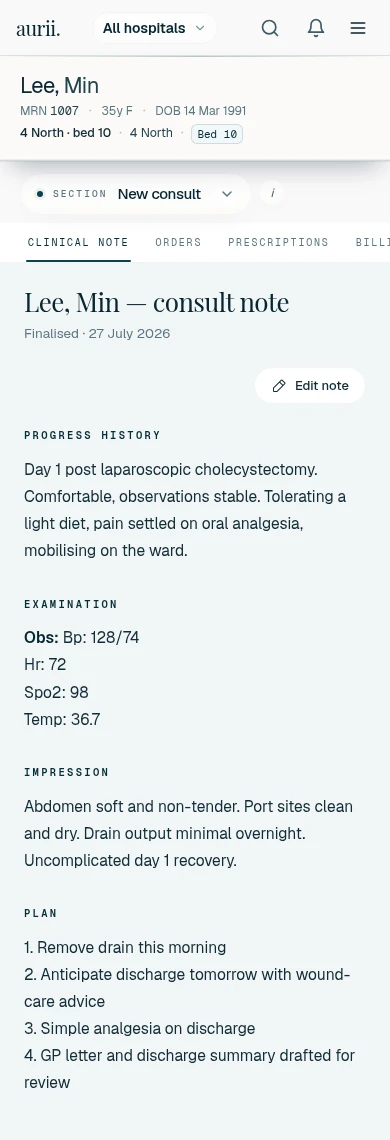
The aurii review screen on a phone: a finalised day-one cholecystectomy note under the patient banner, with progress, examination, impression and plan.

A real aurii screen, shown on a demo patient.

A post-operative progress note.

A day-one review after laparoscopic cholecystectomy, spoken at the bedside. The note assembles as the words land, yours to correct and sign.

Spoken at the bedside Ambient capture

"Day one after the laparoscopic cholecystectomy. He's comfortable and the obs are stable."

"Abdomen's soft and non-tender, port sites clean and dry."

"The drain's had minimal output overnight, so take it out this morning."

"He's tolerating a light diet, pain's settled on oral analgesia, and he's up and mobilising."

"Home tomorrow with wound-care advice and simple analgesia. Letter to his GP please."

Progress note Post-op review, day 1 · Demo patient · 58 · Bed 4
Ready to sign

Progress

Day 1 post laparoscopic cholecystectomy. Comfortable, observations stable. Tolerating a light diet, pain settled on oral analgesia, mobilising on the ward.

Examination

Abdomen soft and non-tender. Port sites clean and dry. Drain output minimal overnight.

Plan

  • Remove drain this morning
  • Anticipate discharge tomorrow with wound-care advice
  • Simple analgesia on discharge
  • GP letter drafted for review
Synthetic demo patient. Reviewed and signed by the treating surgeon before anything is filed.
GP letterDrafted Discharge summaryQueued Billing3 items
Scope

A documentation tool, not a diagnostic device: aurii drafts billing items for your review against the procedure and your fund agreements; it does not decide what is claimable or set fees. You confirm every item before anything is billed.

Built around the theatre day.

A surgical round doesn't pause for paperwork, so review-and-sign fits between beds, not after theatre.

  • Signed Sign at the bedsideThe note is ready the moment you finish speaking. Sign it there, while the patient is in front of you. The paperwork doesn't follow you home.
  • One place The whole bed in one placeThe operation note, daily progress notes, GP letter, discharge and billing sit together against the one patient, in order.
  • Discharge Discharge that's mostly doneEach day's signed note feeds the discharge, so the summary is mostly written by the time the patient goes home. You finish the plan and sign.
  • Delivered Delivered to the GP's inboxLetters and the discharge can be delivered over HL7 v2 with Medical Objects connectivity, landing in the right Australian practice inbox.

Sign the whole list before you leave the ward.

Bring a typical post-op round. We'll show you the note, the operation record, the letters, the discharge and the billing, and where you review and sign.

A$199 + GST / clinician / month no lock-in early access by request

hello@aurii.com.au